
Does CoolSculpting Actually Work and Is It Safe
Does fat freezing work, and is it safe? Those are two questions, and a published result only answers the first. Here is what one publisher reports, and what is left to ask the person offering the treatment.
The question in plain words
You are paying to reduce a stubborn patch of fat. Before you do, you want to know what the treatment does, how well it does it, and what it can cost you if something goes wrong. A results claim and a safety claim are different statements, and each needs its own source.
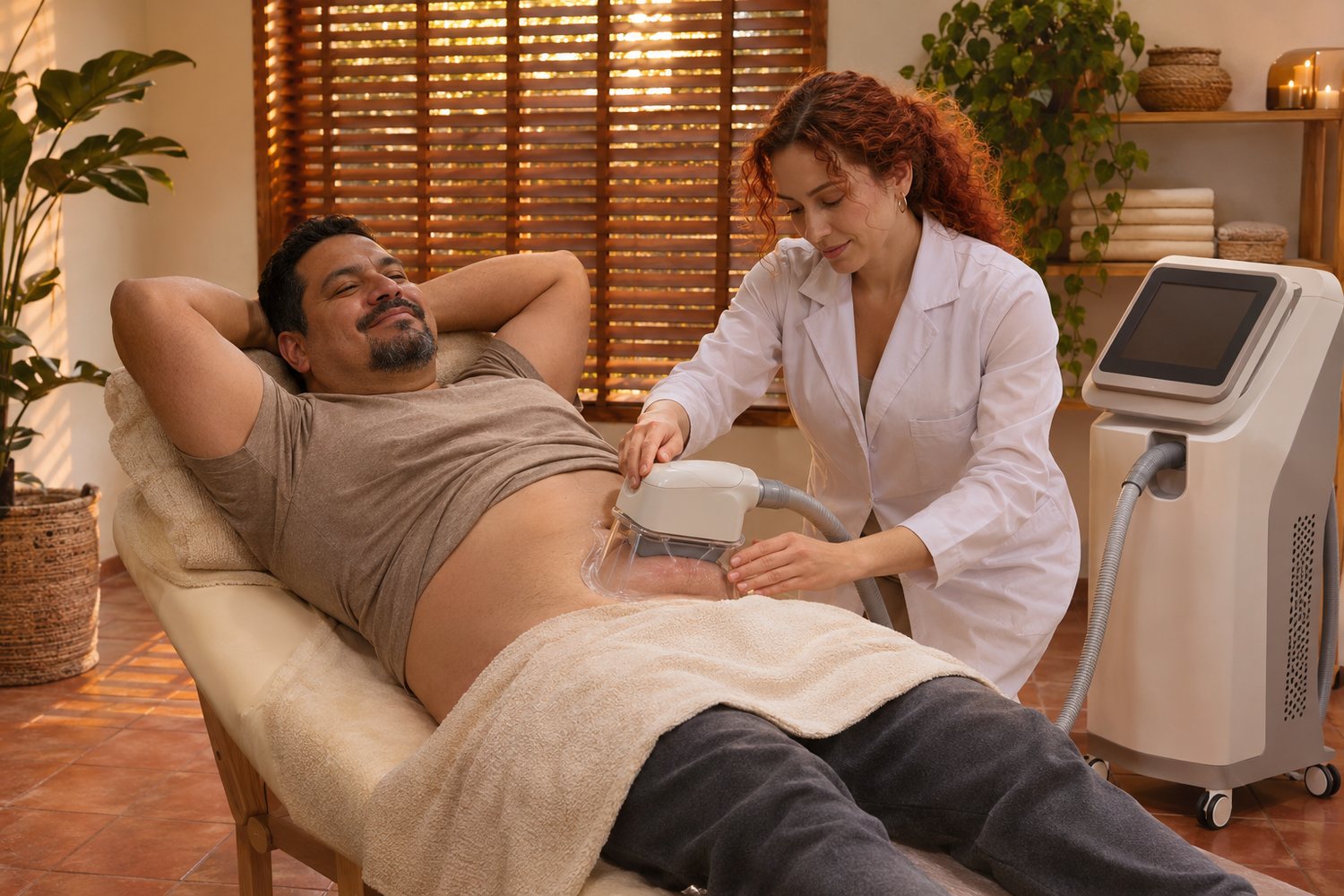
Fat reduction measures: the definition and the removal window
The publisher www.medicalnewstoday.com opens with a definition. CoolSculpting, or cryolipolysis, is a cosmetic treatment that freezes excess fat to remove it from stubborn areas. CoolSculpting works by vacuuming the skin above the area of fatty tissue into an applicator that cools the fat cells.
On results, the same publisher gives its own wording. CoolSculpting and other forms of cryolipolysis have a high success and satisfaction rate. CoolSculpting effectively removes areas with stubborn fat. The body removes the frozen and broken down fat tissues within 1 to 6 months. The procedure also delivers lasting results. It destroys fat cells, so they will not return.
A results claim is not a safety answer
Everything in that passage describes outcomes. None of it tells you what to watch for afterward or how a provider responds to a problem. Treat the success wording as one input, and look for risk statements credited to whoever makes them.
Two pages on this site take up that second half. Fat Freezing Can Cause Fat to Grow: How Often looks at how often the outcome in its title occurs. What to Ask Before Fat Freezing About Fat Growth Risk turns it into questions for a consultation.
Reading outside fat freezing also helps you spot a claim about a different treatment. A review of collagen stimulators in body applications, focused on poly-L-lactic acid covers another product, so it is not evidence about fat freezing.
Questions to take to a provider
- Which publisher or study supports each result you are quoted?
- Does that result apply to the area you want treated?
- What does the provider say can go wrong, and who is that statement credited to?
- What happens, and what does it cost, if the result is not what you expected?
What a success rate does not settle
A summary of success is not a measurement of your own result. The passage above also gives no group size or study design. For a sense of how a narrow report reads, the case study on subcutaneous radiofrequency microneedling for thigh skin laxity caused by weight loss describes one patient.
Ask for the source behind every figure, and weigh the results wording and the risk wording separately before you pay.